
Why NYC Co-Op and Condo Boards Reject Renovation Plans (And How to Avoid Delays)


One of the most common reasons NYC renovation projects get delayed has nothing to do with construction. It's board approval.
Most homeowners have no reason to know the renovation rules of their building—and they shouldn't be expected to. That's one of the reasons experience matters so much in NYC renovations. An experienced renovation team can identify potential approval issues early, helping prevent unnecessary delays and keep projects moving forward.
While every building has its own requirements, there are several common issues that frequently delay renovation approvals in NYC.
Incomplete Renovation Packages
One of the most common reasons renovation applications are delayed is incomplete documentation.
Most NYC boards require far more than a simple description of the work being performed. Before approving a project, they typically want to review detailed information about the renovation, the professionals involved, and how the work will be managed.
Depending on the building, a renovation package may include:
Architectural drawings
Scope of work documentation
Contractor insurance certificates
Engineering reports
Plumbing and electrical plans
Building permit information
Contractor licensing information
A well-prepared submission package can significantly reduce approval delays. Most boards want to review complete plans and supporting documentation before making a decision.
Moving Plumbing Where the Building Doesn't Allow It
Many homeowners want to improve the functionality of their apartment by relocating a kitchen, expanding a bathroom, or adding a laundry area.
While these changes can create a better layout, they often receive additional scrutiny during the approval process.
Building management and review committees typically evaluate how plumbing changes could affect neighboring units and existing building systems. In some buildings, relocating plumbing fixtures may be restricted or require additional engineering review before approval is granted.
Wet-Over-Dry Restrictions

One of the most misunderstood renovation restrictions in NYC involves what's commonly known as "wet-over-dry" rules.
Many co-op and condo buildings prohibit placing wet areas such as bathrooms, kitchens, or laundry rooms above dry living spaces in neighboring apartments.
For example, a homeowner may want to enlarge a bathroom into an adjacent room. While the design may seem perfectly reasonable, the board may reject the proposal if it places plumbing fixtures above a neighbor's bedroom, living room, or other dry space.
These restrictions vary from building to building. At NYHR, wet-over-dry limitations are often one of the first factors we evaluate when planning apartment layouts because they can significantly influence what will and won't receive board approval.
Structural Modifications Require Additional Review
Removing walls is one of the most requested changes in Manhattan apartment renovations.
Many homeowners want to create a more open layout by combining rooms, expanding kitchens, or improving the flow between living spaces. However, boards become particularly cautious whenever structural elements may be affected.
Even walls that appear non-structural often require review by architects or engineers before approval can be granted. Depending on the scope of work, boards may request structural assessments, engineering drawings, load calculations, and additional reviews before approving the project.
The goal is to ensure that the proposed work will not impact the safety or integrity of the building.
Contractor and Insurance Requirements
Many buildings have specific requirements regarding who can perform renovation work within the property.
Boards frequently require contractors to provide proof of insurance, workers' compensation coverage, liability insurance certificates, licensing information, and references demonstrating relevant project experience.
In some cases, buildings may have insurance requirements that exceed standard contractor policies.
Missing or incorrect insurance documentation can delay approvals even when the renovation plans themselves have already been accepted.
Construction Logistics and Building Rules
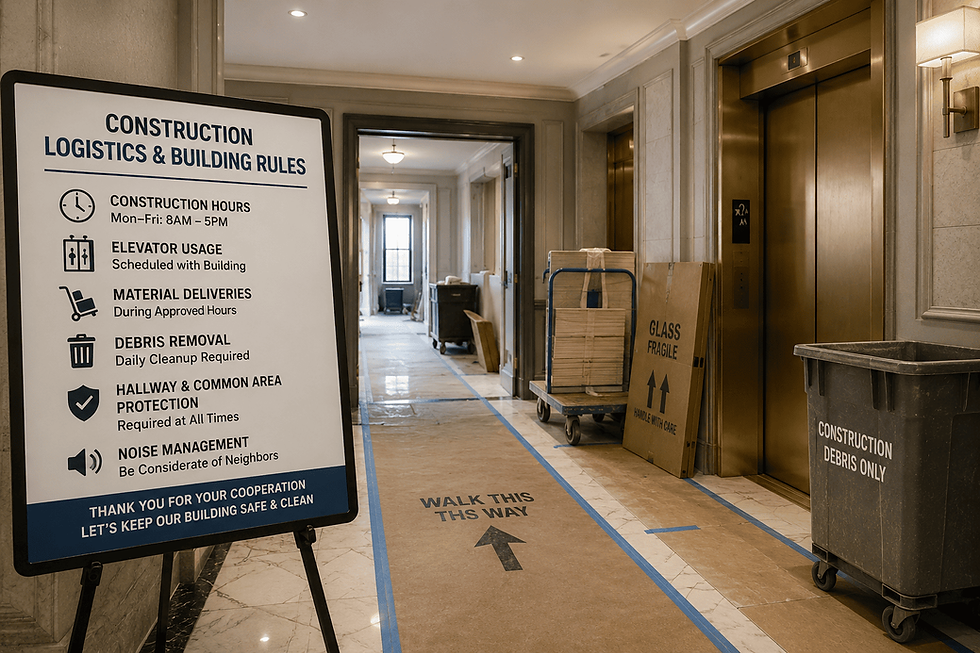
Many boards are equally concerned with how the renovation will be carried out once work begins.
Common concerns include:
Construction hours
Elevator usage
Material deliveries
Debris removal
Hallway and common area protection
Noise management
They want to ensure that renovation projects are organized, professionally managed, and minimally disruptive to other residents.
Having managed renovations in co-ops and condos throughout Manhattan, the NYHR team understands the importance of coordinating deliveries, protecting common areas, and complying with building-specific requirements before construction begins.
Homeowners’ Alteration Agreements Matter
Most NYC co-op and condo buildings require homeowners to sign an alteration agreement before construction begins.
These agreements outline the building's renovation requirements and often include rules regarding:
Permitted work hours
Insurance requirements
Security deposits
Noise limitations
Plumbing and electrical modifications
Contractor responsibilities
Many homeowners are surprised by how detailed these agreements can be.
Every Building Is Different
One of the biggest misconceptions homeowners have is assuming that the rules are the same across all co-ops and condos. In reality, two buildings located on the same block may have completely different renovation requirements. Some buildings allow limited plumbing relocations, while others prohibit them entirely. Some require engineering reviews for certain projects, while others focus more heavily on construction logistics and insurance requirements. Understanding the specific requirements of a building is often one of the most important parts of the planning process.
Final Thoughts
Most board rejections aren't caused by bad renovation ideas. More often, they're the result of building requirements, documentation issues, or restrictions that weren't identified early in the planning process.
At NY Home Restoration (NYHR), we've seen firsthand how approval requirements can shape everything from layout decisions to renovation timelines. After years of renovating apartments throughout Manhattan, we've learned that the approval process is often just as important as the construction itself.
Working with a team that understands the realities of NYC co-op and condo renovations can help create a smoother path from planning to approval and ultimately to construction.
If you're considering a kitchen remodel, bathroom renovation, or full apartment renovation in Manhattan, planning for board approval from the start can make the entire renovation process significantly smoother.
Frequently Asked Questions
How long does co-op or condo board approval take for a renovation?
Approval timelines vary by building. Some boards review renovation applications within a few weeks, while others may require additional reviews, revisions, or scheduled board meetings before making a decision. The completeness of the submission package often plays a significant role in the review process.
Can I move my kitchen or bathroom during a renovation?
It depends on the building. Some co-op and condo buildings allow certain plumbing relocations, while others impose strict limitations. Proposed changes are often reviewed to ensure they comply with building policies and do not create risks for neighboring units.
What are wet-over-dry rules?
Wet-over-dry rules are building restrictions that limit where bathrooms, kitchens, and other plumbing fixtures can be located. Many buildings prohibit placing these wet areas above living rooms, bedrooms, or other dry spaces in neighboring apartments to reduce the risk of water damage.
What is an alteration agreement?
An alteration agreement is a document provided by a co-op or condo building that outlines the rules, requirements, and responsibilities associated with a renovation project. It often includes information about insurance requirements, work hours, contractor obligations, and building procedures.
Can a co-op or condo board reject a renovation project?
Yes. Boards may reject or request revisions to a project if it conflicts with building policies, creates structural concerns, violates plumbing restrictions, or lacks the required documentation.
Why is experience with NYC co-op and condo renovations important?
Renovating within a co-op or condo building involves more than construction. Building requirements, approval procedures, insurance documentation, and renovation restrictions can all influence a project's timeline and design. At NY Home Restoration (NYHR), we've found that identifying these requirements early often helps prevent revisions, approval delays, and unexpected project changes later in the process.


Comments